10-year Treasury yield drops below 5% as AI jitters send investors running for safety
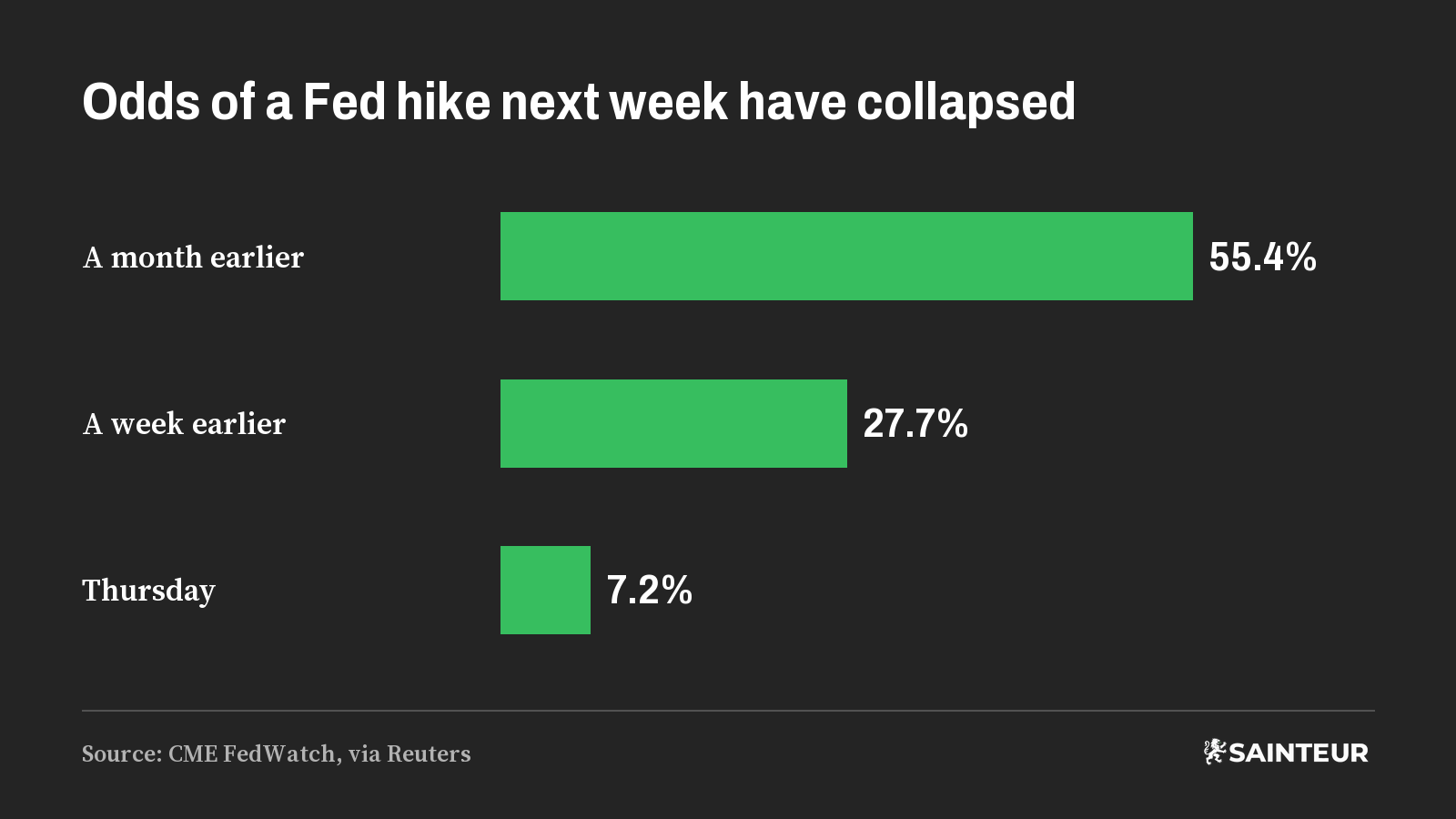
A sell-off in stocks over the AI trade sent money into government bonds on Thursday, pulling the 10-year yield under 5% for the first time since Sept. 23, with the odds of a Fed hike next week down to 7.2%.
By James Mitchell ·
For information only, not investment advice. Prices delayed.
Tickers: META
Treasurys got their old job back on Thursday. Yields fell sharply as investors ran for safety during a steep sell-off in stocks driven by worries about the artificial intelligence trade and surging oil prices, CNBC reported. The benchmark 10-year yield slid more than 17 basis points, its biggest one-day decline since March 10, 2023, and dipped below 5% for the first time since Sept. 23, according to CNBC.
The trigger was a fresh round of doubt about AI. Stocks sold off "after concerns about the sustainability of the AI outlook reignited, boosting the safe-haven appeal of government debt," Reuters reported. Meta ($META) shares fell after the company's quarterly earnings report and its announcement of new non-voting shares to help fund its AI expansion, Reuters said.
"It is a flight to safety," Mitch Goldberg, president of ClientFirst Strategy, told CNBC. "People are all of a sudden terrified of the amount of bond issuance by AI-related companies." Larry Holzenthaler, a senior fixed-income portfolio manager at Catalyst Funds, put it more simply: "For the first time in a while, Treasurys are enjoying haven status."
That's a sharp turn from earlier this month. In early October, 10- and 30-year yields reached their highest levels in more than two decades on worries about inflation and high energy prices, CNBC noted. The 10-year had climbed to 5.3645% on Oct. 7, its highest since April 2002, Reuters reported. Thomas Urano of Sage Advisory told Reuters the tug-of-war between inflation fears and safe-haven demand now has a clear leader: "The flight-to-quality trade is winning in the Treasury space."
The inflation worry hasn't gone anywhere, though. Concerns about a slowdown in AI spending have overshadowed economic data showing persistent inflation pressures, according to Reuters. Thursday's jobless claims were firm, too: the Labor Department said weekly initial claims fell 6,000 to 194,000, below the 200,000 economists polled by Reuters expected.
Oil is the wild card. Higher energy prices on Thursday followed a New York Times report, citing unnamed US officials, that the US and Israel are considering resuming strikes on Iran in a "short but intensive" operation after the Nov. 3 midterm elections, CNBC reported. That report hasn't been confirmed. Gregory Faranello of South Street Securities told CNBC that if energy prices "stay elevated, it could force the Fed's hand to do even more, which certainly wouldn't be wouldn't be a good thing for the bond market."
What changes for your money: the Fed math. Traders now see much less chance of a rate hike at next week's meeting. CME FedWatch put the odds of a hike of at least 25 basis points at 7.2%, down from 27.7% a week earlier and 55.4% a month earlier, Reuters reported. That's market pricing, not a signal from the Fed, and as Faranello's warning suggests, a lasting oil spike could change it.
Sources
Tags: interest-rates · treasury · ai · markets-moves · fed